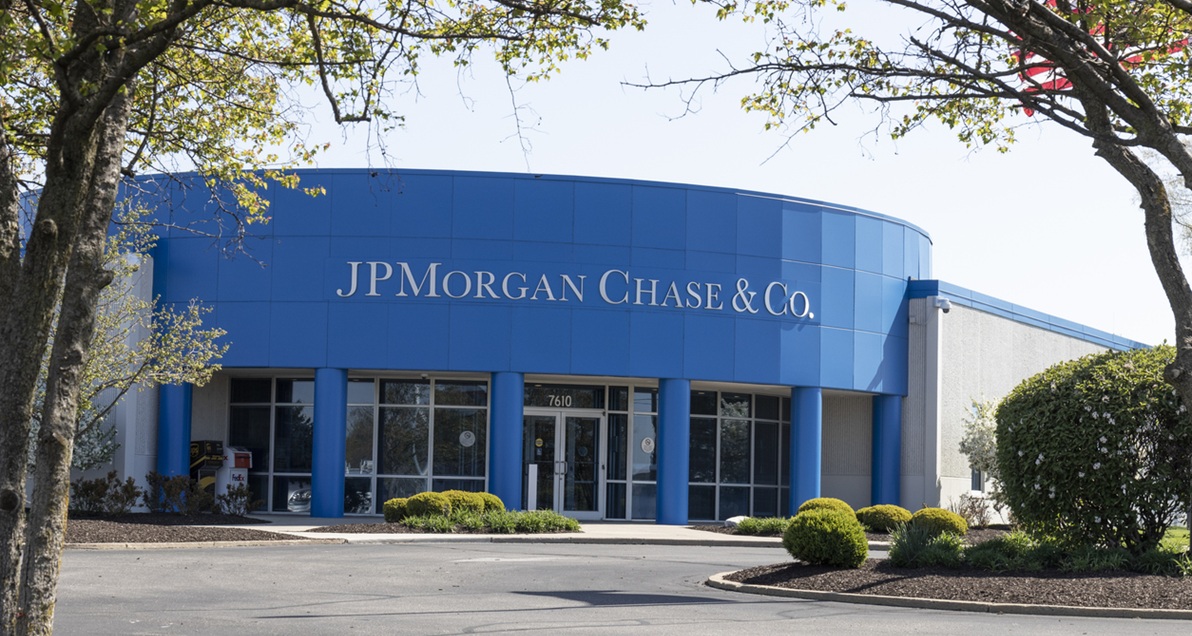
In February 2026, JPMorgan Chase — the largest bank in the United States — quietly announced it has "removed firmwide restrictions" on lending to manufacturers of modern sporting rifles. This reversal marks a turning point in a decade-long battle between America's banking giants and the lawful firearms industry.
But how did we get here? The story goes back further than most gun owners realize — and every FFL dealer and firearms business in America should understand what happened.
The Timeline: How Banks Declared War on Guns
Operation Choke Point (2013-2017)
It started under the Obama-Biden administration with a Department of Justice initiative called Operation Choke Point. The scheme was simple but devastating: pressure banks to cut ties with businesses the administration didn't like — including lawful firearms dealers and manufacturers.
The mechanism? The FDIC published a newsletter in 2011 that listed gun makers and retailers as businesses "associated with high-risk activities" — putting them in the same category as payday lenders and Ponzi schemes. Banks got the message: do business with gun companies, and expect federal scrutiny.

The results were immediate. Top Gun Firearms Training & Supply in Miami had its banking account terminated by BankUnited N.A. in 2014. The bank's letter was chillingly honest: "This letter in no way reflects any derogatory reasons for such action on your behalf. But rather one of industry."
Read that again: "one of industry." A lawful business, denied banking services, solely because they sold guns.
Operation Choke Point was officially ended in August 2017 under the first Trump administration. But the damage was done — and the banks had already developed a taste for anti-gun activism.
Banks Go Rogue (2018-2023)
After the Parkland shooting in February 2018, major banks seized the moment to impose their own gun control — no legislation required:
- Citigroup became the first major Wall Street bank to enact firearms restrictions, requiring business clients to stop selling to buyers under 21, halt "high-capacity" magazine sales, and restrict certain semi-automatic firearms.
- Bank of America announced it would stop lending to gun manufacturers making what it called "military-inspired" firearms for civilian use — targeting the AR-15 and similar modern sporting rifles.
- JPMorgan Chase quietly reduced its firearms industry relationships. CFO Marianne Lake confirmed that business relations with gunmakers had "come down significantly."
In May 2021, JPMorgan CEO Jamie Dimon testified before Congress and stated under oath: "We do not finance the manufacture of military-style weapons for civilian use."
The Intuit Scandal (2023)
The extent of JPMorgan's anti-gun crusade was exposed when Senator Ted Cruz launched an investigation after Dawson Precision, a Texas-based firearm parts manufacturer, had its QuickBooks subscription canceled without warning.
The investigation revealed that JPMorgan Chase was pressuring Intuit — the maker of QuickBooks — into preventing firearm businesses from using its payment processing services. JPMorgan's corporate communications officer confirmed to The Daily Signal that the bank had advised Intuit to restrict firearms retailers. Bank of America was separately identified as requiring Intuit to prohibit gun manufacturers from using QuickBooks payroll.
They weren't just refusing to bank gun companies — they were pressuring third parties to cut them off too.
The Credit Card Tracking Push (2022-2023)
As if direct debanking wasn't enough, a movement emerged to track individual gun purchases through special credit card merchant category codes. The idea: every time you buy a gun or ammo with a credit card, it would be flagged with a special code — creating a de facto gun registry through the banking system.
Thankfully, at least 20 states enacted laws protecting firearm purchaser privacy, and major credit card companies paused implementation.
"What we had happening with this banking discrimination was nameless and faceless banking executives making policy decisions for the rest of America, but they were unaccountable to the rest of America. You couldn't vote them out. They were making those decisions from Wall Street that were affecting folks on Main Street, and they were literally running some mom-and-pop shops out of business because they couldn't get banking services."
The Fight Back
States Take Action
While Washington dithered, states fought back. 11 states enacted the Firearm Industry Nondiscrimination (FIND) Act: Alabama, Florida, Georgia, Idaho, Louisiana, Montana, Oklahoma, Texas, Utah, West Virginia, and Wyoming. These laws prohibit state agencies from contracting with corporations that discriminate against the firearms industry.
The consequences were real. In November 2021, Louisiana's State Bond Commission voted unanimously to remove JPMorgan Chase from a $700 million state debt refinancing deal after the bank refused to certify it wasn't discriminating against gun manufacturers. Texas similarly barred Citigroup from competing for $3.4 billion in state bonds.
Hit them in the wallet — it works.
Trump Executive Order (August 2025)
President Trump signed "Guaranteeing Fair Banking for All Americans" on August 7, 2025, which:
- Established that no American should be denied financial services because of their constitutionally protected beliefs
- Specifically highlighted firearms and digital assets as targeted industries
- Directed federal banking regulators to eliminate "reputational risk" as a basis for denying services
- Required regulators to identify banks with discriminatory debanking policies
Even before the executive order, Trump had confronted Bank of America CEO Brian Moynihan directly at the World Economic Forum in Davos in January 2025: "I hope you start opening your bank to conservatives, because many conservatives complain that the banks are not allowing them to do business."
The OCC Report: The Smoking Gun (December 2025)
On December 10, 2025, the Office of the Comptroller of the Currency dropped a bombshell: a report confirming that all nine of the largest banks under its supervision had engaged in improper business refusals targeting the firearms industry.
The nine banks investigated: JPMorgan Chase, Bank of America, Citigroup, Wells Fargo, U.S. Bank, Capital One, PNC Bank, TD Bank, and BMO Bank.
Key findings:
- Banks restricted financing to firearms manufacturers or retailers, citing "reputational risk"
- At least two banks cited "polarizing" public opinion about gun ownership as justification
- Another bank noted that "an association with certain Firearms Manufacturers and Retailers could result in significant Franchise risk"
OCC Comptroller Jonathan Gould stated: "It is unfortunate that the nation's largest banks thought these harmful debanking policies were an appropriate use of their government-granted charter and market power."
The Dominoes Start Falling
Citigroup (June 2025)
Citigroup was the first to blink, ending its seven-year-old firearms restriction policy on June 3, 2025. The bank stated: "We also will no longer have a specific policy as it relates to firearms." They also updated their employee code of conduct to prohibit discrimination based on political affiliation.
Bank of America (Late 2023 - Ongoing)
Bank of America quietly shifted to a "case-by-case basis" approach in mid-2024, though firearms remain classified as an area of "heightened sensitivity" requiring senior-level risk committee review. Translation: they're still not thrilled about it.
JPMorgan Chase (February 2026)
And now, JPMorgan Chase — the biggest fish of all. In a letter from Business Banking CEO Ben Walter, the bank announced it has:
- Removed firmwide restrictions on lending to manufacturers of modern sporting rifles for civilian use
- Will now evaluate firearms businesses on a case-by-case basis using objective commercial factors
- Updated its Code of Conduct to bar discrimination on political or religious viewpoints
- Implemented employee education and documentation improvements
The bank's stated reasoning: "Based on our experience over time, we found that some of the expected risks related to lending to such manufacturers were not as significant as we had anticipated."
Translation: "We were wrong, and it was costing us money."
"There are big changes for the firearm industry when it comes to access to banking services. JPMorgan Chase recently announced the banking giant's policy of denying services to manufacturers of Modern Sporting Rifles is over."
The NSSF is taking a "Trust, but verify" approach — smart, given the industry's history with these banks.
The Broader Legislative Fight
Congress is working to make sure this never happens again:
- Fair Access to Banking Act (H.R. 987 / S. 401) — Requires banks to provide services based on objective risk, not industry bias
- FIRM Act (S. 875 / H.R. 2702) — Eliminates "reputational risk" from banking regulation entirely. Already passed committee in both chambers with bipartisan support.
- Federal FIND Act (S. 137 / H.R. 45) — Federal version of state firearm industry nondiscrimination laws
What This Means for Gun Owners and FFL Dealers
If you're an FFL dealer or firearms business, this is genuinely good news — but with caveats:
- The tide has turned — but it's not over. Banks are reversing policies due to political pressure and state laws, not because they had a change of heart. If that pressure disappears, the policies could return.
- Support businesses that support you. Throughout this fight, smaller banks and credit unions served the firearms industry when the big banks wouldn't. Remember that loyalty.
- Push for permanent legislation. Executive orders can be reversed. State FIND Acts and federal fair banking legislation provide lasting protection.
- Document everything. If you're denied banking services, document it. Report it to the NSSF, your state attorney general, and the OCC. The more evidence of discrimination, the stronger the case for permanent protections.
The firearms industry generates $90 billion+ in annual economic impact and supports over 375,000 jobs in America.
No bank should have the power to destroy lawful businesses because of ideology.
The fight isn't over — but we're winning.